5 Benefits of Automated Risk Analysis for Mid-Sized Companies
Learn how automated risk analysis helps SMEs detect risks early, ensure compliance and improve decision-making.
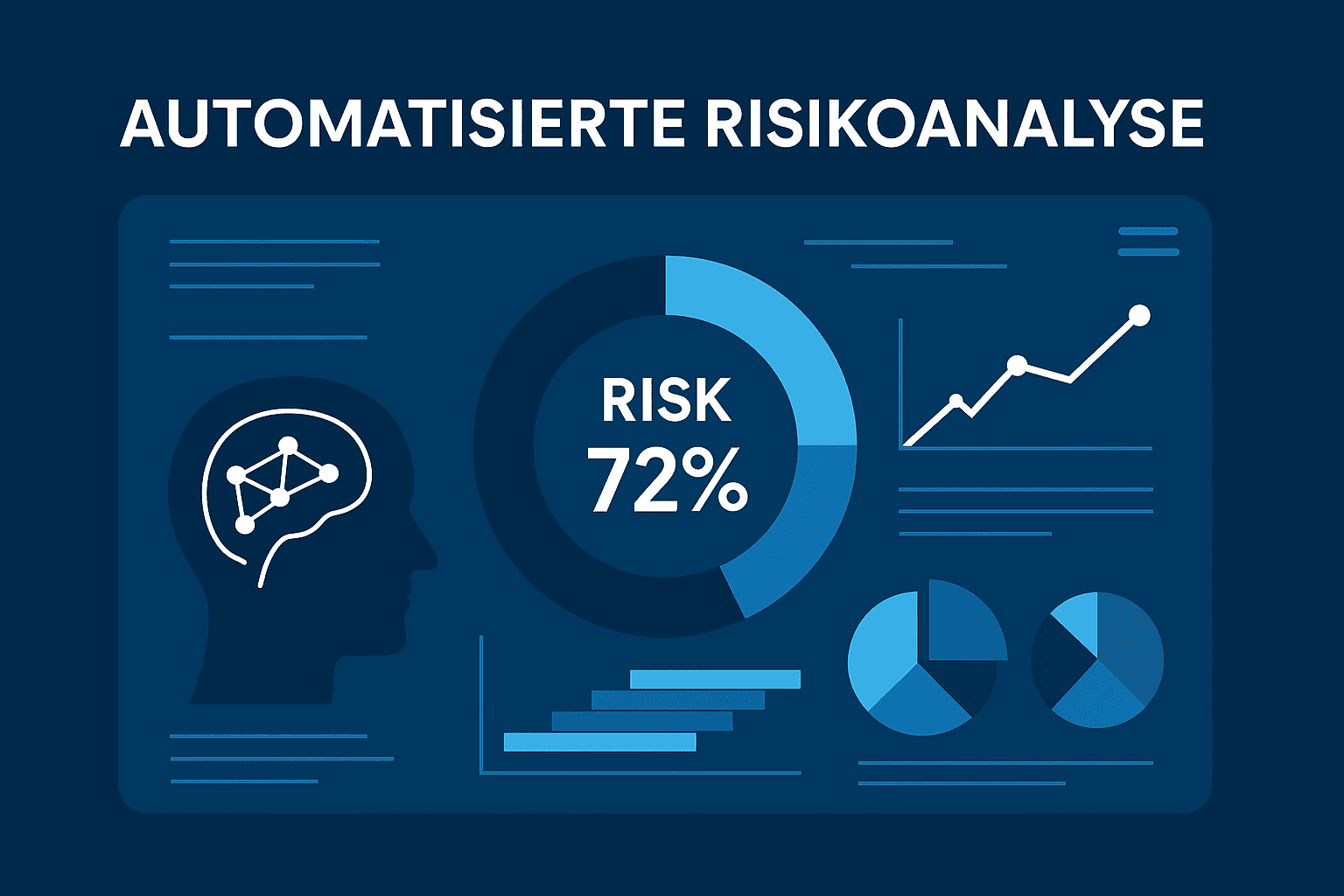

In an increasingly digital and complex business world, mid-sized companies face growing challenges: cyber attacks, regulatory requirements, volatile markets and supply-chain risks all have a significant impact on an organisation's risk profile.
Anyone still relying on manual risk analysis runs the risk of missing developments and deploying resources inefficiently. Automated risk analysis offers a modern, scalable approach to identifying, assessing and proactively managing risks early on, giving companies a clear competitive edge.
What is automated risk analysis?
Automated risk analysis uses specialised software and AI algorithms to systematically identify, assess and continuously monitor risks.
Data from financial systems, processes, market trends and external sources converge in real time. Modern tools powered by machine learning recognise patterns, prioritise risks and deliver automated recommendations for action.
1. Centralised and transparent risk data
Automated solutions consolidate all risk-relevant information on a single platform instead of scattered spreadsheets or manual reports. This delivers:
- Transparency: Up-to-date, consistent data for all stakeholders- Efficiency: No duplicate data entry- Consistency: Uniform standards and a lower error rate
By integrating with GRC, vulnerability-scanning or ISMS systems, organisations gain a holistic overview of their entire risk landscape.
2. Real-time risk assessment and proactive decisions
While manual analyses quickly become outdated, automated tools provide continuous real-time assessments:
- Early detection: Threats are identified immediately- Proactive management: Strategies can be adjusted flexibly- Better decisions: Current data create a solid decision-making foundation
In dynamic markets, this agility is a decisive success factor.
3. Optimised processes and resource efficiency
Automation reduces routine workload and human error.
This leads to:
- More efficient workflows: Clear responsibilities and shorter reaction times- Focus on value creation: Teams concentrate on strategic tasks- Cost savings: Less manual work, higher productivity
For SMEs with limited resources in particular, this is a clear advantage.
4. Simplified compliance and reporting
Standards such as ISO 27001, GDPR or industry-specific regulations require regular risk analyses.
Automated solutions enable:
- Compliance reports at the push of a button- Real-time monitoring of regulatory changes- Complete documentation and proof of due diligence
This keeps your organisation audit-ready and legally protected at all times.
5. Competitive advantage through continuous improvement
Automated risk analysis is an ongoing process:
- Continuous monitoring of new threats- Rapid response to changes- Self-learning systems that steadily improve
Organisations that detect and manage risks earlier are more resilient and agile, a clear edge over the competition.
Practical example: automated risk analysis in manufacturing
A mechanical engineering company integrates risk-analysis software that evaluates production, supply-chain and market data in real time.
The result: early detection of potential disruptions, automatic compliance reports and an up-to-date management dashboard.
Outcome: Fewer production outages, lower liability risks, greater efficiency.
Frequently asked questions
How secure are automated risk-analysis tools?
Modern solutions rely on encryption, role-based access controls and regular security updates.
Does automation replace human expertise?
No, it complements it. The best results come from combining technology with specialist knowledge.
What risks does automation itself pose?
System outages or cyber attacks, for example. Regular maintenance and contingency plans are therefore essential.
How to get started with automated risk analysis
Getting started is straightforward with a clear goal definition and the right tool:
- Integration: Compatibility with existing systems- Scalability: Grows with your organisation- Usability: Intuitive operation and clear reports- Security standards: GDPR- and IT-security-compliant
👉 Learn more about ISMS and risk management at Kopexa
Your next step: efficiency and security with Kopexa
Automated risk analysis is a key to digital resilience.
Those who detect risks early, manage them purposefully and monitor them continuously not only protect assets but also build trust with customers and partners.
➡️ Find out more at kopexa.com and make your risk management fit for the future.
Quick answers
Frequently Asked Questions
Still have a question? Find the answers here.
What is automated risk analysis?
Automated risk analysis uses specialised software and AI algorithms to systematically identify, assess, and continuously monitor risks. It aggregates data from financial systems, processes, market trends, and external sources in real time.
What benefits does automated risk analysis offer mid-sized companies?
SMEs benefit from centralised risk data, real-time risk assessments, optimised processes, simplified compliance reporting, and a competitive advantage through continuous improvement. Resource efficiency is especially valuable for SMEs with limited budgets.
Does automated risk analysis replace human expertise?
No, automation complements human expertise. The best results come from combining technology with domain knowledge. Teams can focus on strategic tasks while routine work is automated.
How does automated risk analysis help with compliance requirements?
Automated solutions enable one-click compliance reports, real-time monitoring of regulatory changes, and seamless documentation. This keeps the organisation audit-ready and legally protected at all times.
What should you look for when choosing a risk analysis tool?
Key criteria include integration with existing systems, scalability, user-friendliness, and compliance with security standards such as GDPR and IT security requirements.
What risks does automation itself introduce?
Potential risks include system failures or cyberattacks on the analysis tools themselves. Regular maintenance and contingency plans are essential to minimise these risks.