Smart glasses: EDPB calls for clear recording indicators
The EDPB published its smart-glasses statement on 13 October. The focus is unnoticed recording and the responsibilities of users and service providers.
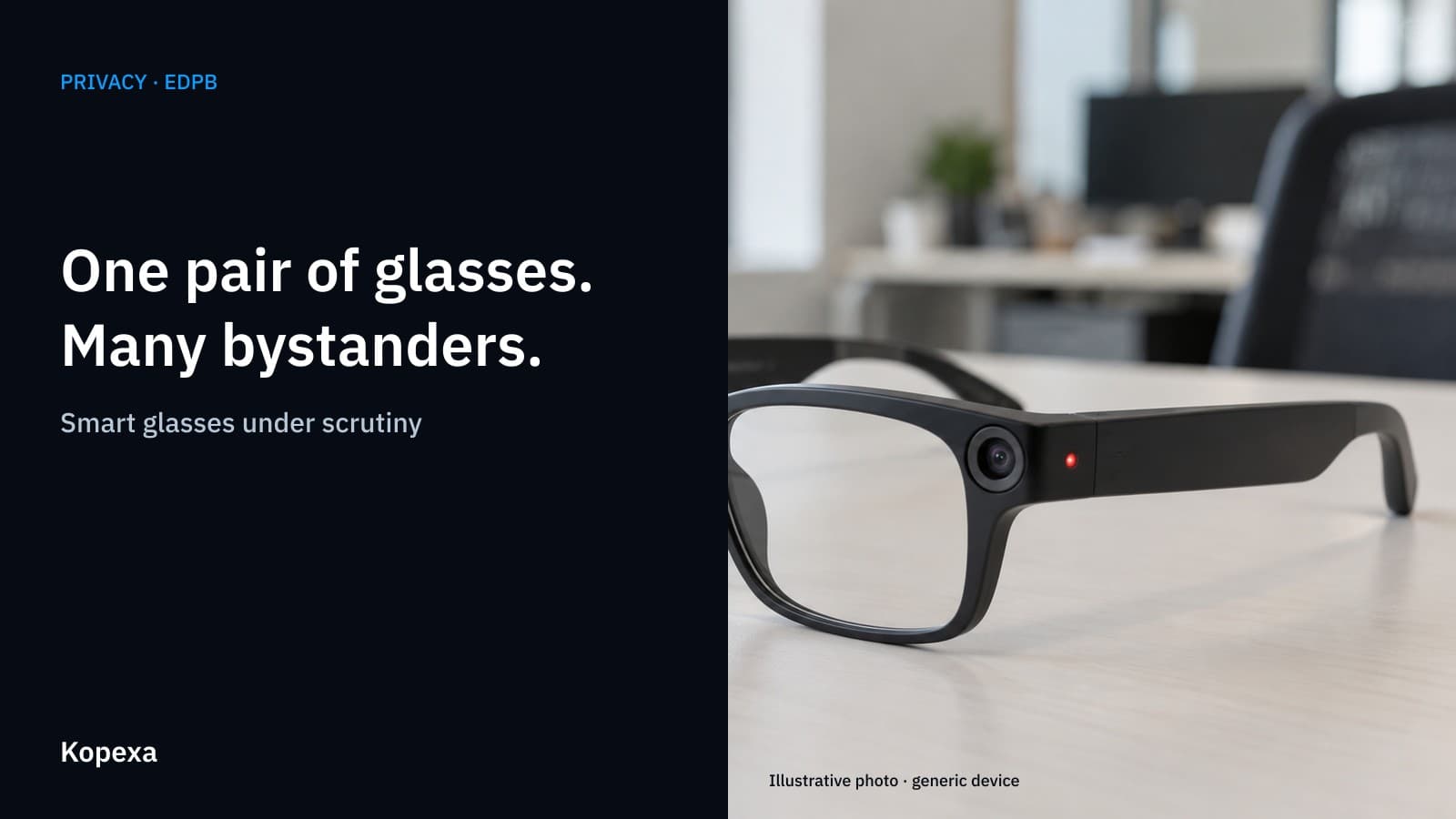

Glasses can now take photographs, listen and send images to connected services. People facing the wearer may barely notice. This is the problem addressed by the European Data Protection Board (EDPB) in its statement on smart glasses adopted on 13 October 2026.
The news: privacy for people who do not own the glasses
In its announcement, the Board focuses on people who neither bought nor configured the glasses but are captured by them. It highlights risks in workplaces, schools and hospitals, among other settings.
The statement provides preliminary guidance. It does not introduce a blanket ban on smart glasses.
A small light is not automatically enough
The eight-page document discusses conspicuous visual and audio signals and technical safeguards. A warning needs to work in everyday conditions, rather than merely exist on a product specification sheet.
A recording indicator does not itself make recording lawful. Legal basis, purpose and further data protection duties remain separate questions. The Board also stresses that responsible manufacturers and connected service providers cannot shift their own obligations onto wearers.
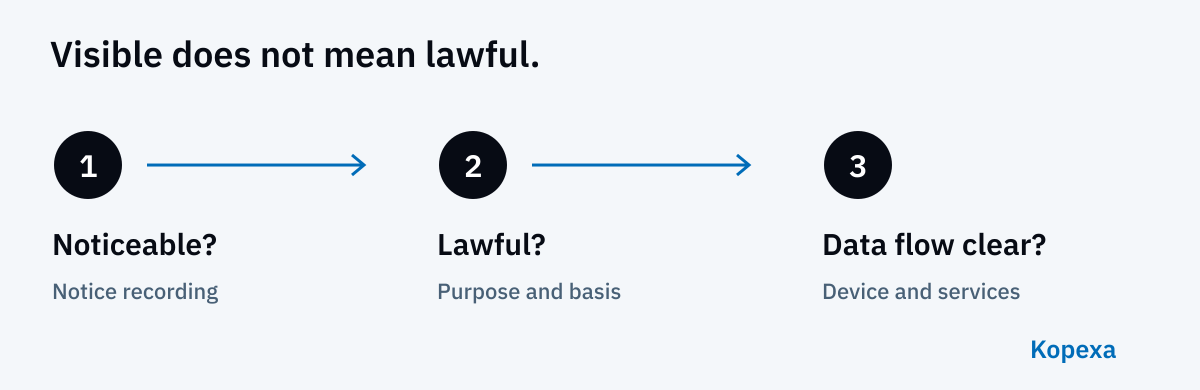
A personal recording is not always purely private
The distinction depends on use: a private family recording differs from professional use or public distribution. The EDPB refers to the household exemption for purely personal activities. Other areas of law may still apply.
For companies, this raises an organisational question: do staff and visitors actually know when glasses record or use a connected service?
Our view: an everyday device becomes a governance issue
Camera glasses attract less attention than a raised smartphone. Introducing them at work should therefore involve more than purchasing another gadget. Responsibilities for use, handling recordings and the actual data flow need to be considered together.
Consider remote assistance in a workshop: transmitting a useful image of a faulty component could also capture colleagues, customer documents or screens. This is our illustrative interpretation, rather than an individual case documented by the EDPB.
For the organisational context, our article on ISO 27001 and privacy explains the connection between technical and organisational safeguards. The central news remains that discreet technology needs understandable, effective transparency.
Cover: AI-generated illustrative photograph of generic camera glasses, not a specific product. Design: Kopexa.
Sources
- EDPB: Smart glasses – news and initial guidance () [Accessed ]
- EDPB: Statement on smart glasses () [Accessed ]