Ransomware in Japan: Cloud attack affects 495 organisations
IDC Frontier confirms ransomware at IDCF Cloud. Verified facts about the disruption, backups and Japan’s response, without assuming AI caused the attack.
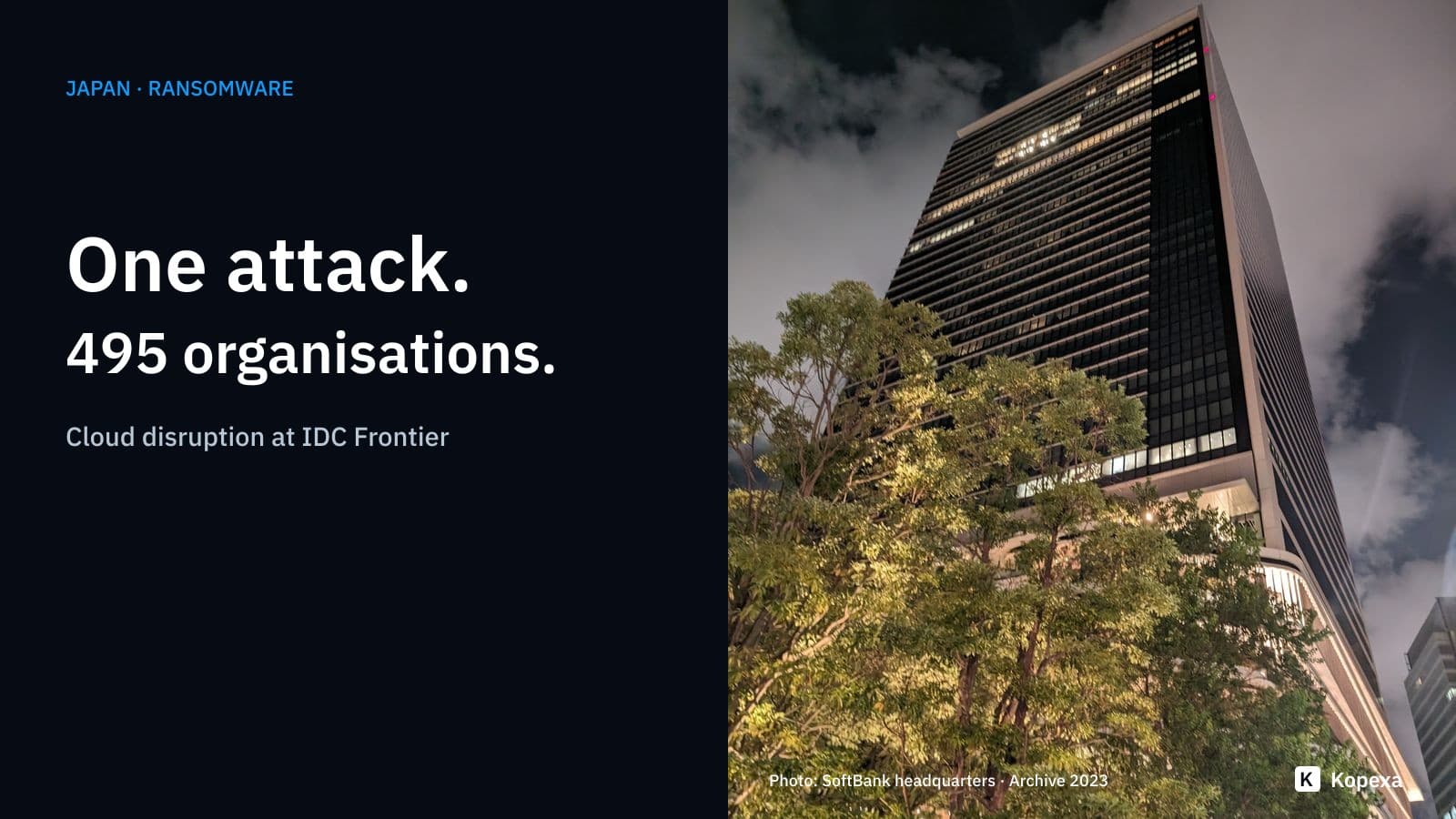

A ransomware attack on Japanese cloud provider IDC Frontier affected 495 companies and local authorities. The provider confirmed the attack on October 7. Its October 14 update adds findings about backups and possible data exfiltration.
The incident comes amid several cyber incidents in Japan. Headlines about a cyber emergency and an AI-driven wave combine claims that need separate evidence. The original notices provide a clearer account of the cloud incident.
The key facts
- Confirmed: Ransomware at IDCF Cloud, affecting 495 customer organisations.
- Updated: Progress extracting snapshot backups does not establish completed recovery.
- Not established: AI caused this attack, or all recent incidents form one coordinated operation.
What happened at IDC Frontier
The October 7 second notice identifies ransomware as the cause of disruption in East Japan Region 1. Network connections were isolated and systems stopped to contain the incident. Investigation of the intrusion was continuing.
The customer count describes the reach of a provider incident. It does not mean 495 separate compromises of customer companies. A shared service can disrupt many dependent organisations at once.
October 14: Backups and data findings
The fifth notice says backup data can be extracted for 194 customers who used snapshots. Recovery feasibility and delivery are being discussed individually.
The provider reports no evidence of exfiltration from affected virtual servers and concludes that those data were not exfiltrated. Separately, it confirms unauthorised queries of portal registration information for 48 companies, without finding evidence of export.
These are separate investigation scopes. Findings about virtual server contents do not automatically cover every portal record. Extractable backup data also do not establish restored service.
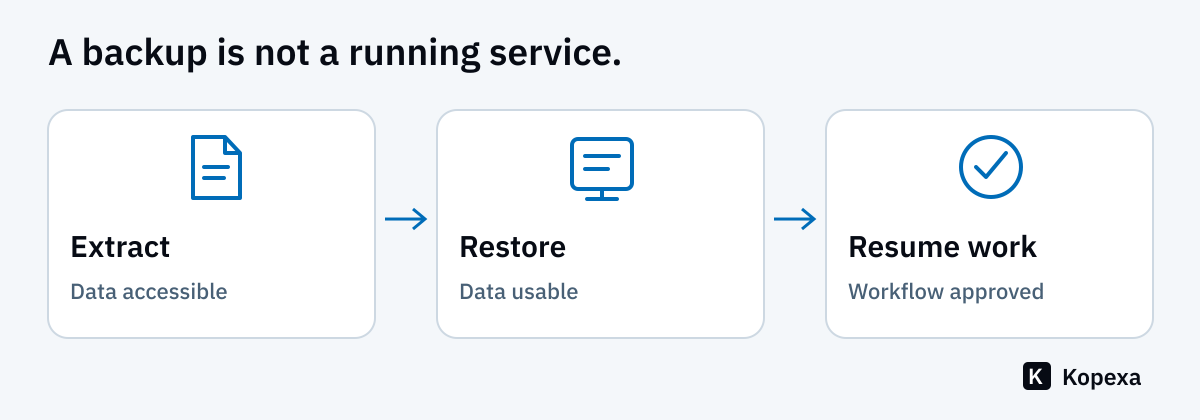
Editorial explanation: a backup statement is not confirmation of restored operations.
Why banks are being urged to change identity verification
Japan’s FSA warning of October 9 addresses identity-document images exposed in recent breaches. It urges financial institutions to accelerate the move to chip-based remote identity checks ahead of the relevant image-based method’s abolition on April 1, 2027.
This is neither a blanket ban on driving licences nor confirmation that such images came from IDCF. It responds to the broader situation.
Cyber emergency and AI: Separate claims
A New York Times report carried by The Star quotes former digital minister Masaaki Taira describing an emergency in cyberspace. That political description does not establish a formally declared nationwide state of emergency.
The IDCF notices reviewed here do not confirm AI as the cause. General statements about AI assisting attackers do not identify the tools used in this incident. Several incidents occurring close together also do not, by themselves, demonstrate a coordinated campaign.
The response reaches beyond IT teams
Japan’s IPA warning of October 9 treats cybersecurity as a leadership and risk-management issue, particularly for organisations holding large or sensitive information assets.
Our view: The case illustrates how one provider’s incident can matter far beyond its own organisation. Customers need reliable information about scope, data exposure and recovery. Those questions can have different answers and timelines.
Our supplier risk management guide explores external dependencies. The article on continuity after the Fehmarnbelt incident covers working through an IT outage.
Image: SoftBank headquarters in Tokyo, archive photograph by Syced (2023), Wikimedia Commons, CC0. IDC Frontier is part of the SoftBank corporate environment. This is not the affected data centre. Crop and design: Kopexa.

Quick answers
Frequently Asked Questions
Still have a question? Find the answers here.
Has AI been confirmed as the cause of the IDCF attack?
The provider notices reviewed here do not confirm AI as the cause. General warnings about AI misuse do not establish its use in an incident.
Do extractable backups mean service has been restored?
No. Extracting data, restoring it and approving service operation are separate steps and need separate status statements.
Sources
- IDC Frontier: Ransomware bestätigt – zweite Mitteilung () [Accessed ]
- IDC Frontier: Ermittlungs- und Wiederherstellungsstand – fünfte Mitteilung () [Accessed ]
- Japan FSA: Cybersecurity and identity-verification warning () [Accessed ]
- IPA: Response to incidents involving unauthorised access and data leakage () [Accessed ]
- The New York Times / The Star: Ransomware attacks have swept Japan. AI may be making them easier () [Accessed ]