Measure · ISO 27001
Plan capacity and address bottlenecks
Establish a service’s needs, observe actual resource use and address foreseeable bottlenecks. Reuse existing operational data and records.
Reuse existing records
Reuse the BIA, service description, existing monitoring and operational or procurement records. No new policy or separate report list is needed where the information remains accessible there.
What to do
- 1
Establish needs and limiting resources
Choose a service and use its existing performance and availability requirements. Identify peaks, expected growth and relevant dependencies: for example storage, database connections, network, service limits or available specialists. Record the required reserve, lead times and an owner in the existing service or operational record.
- 2
Observe use and set action thresholds
Use existing measurements and trends. Establish which warning signs trigger action, who acts and how much time remains for an adjustment. Check expected peaks through suitable load tests or reliable operational data. For critical services, include relevant failure or recovery operation.
- 3
Adjust and check the effect
Increase the limiting resource or reduce demand, for example by removing old data that may legitimately be deleted, optimisation or revised scheduling. Then check the actual performance achieved. Update the decision, date and result in the existing record; revisit assumptions when use changes materially.
Worked example
Storage grows faster than procurement
A document service grows each month. Available storage would run out before the next routine procurement date. The figures are fictional.
- Storage reserve and delivery lead time
- DecisionOperations compares the usage trend with the required reserve and delivery lead time. The responsible role arranges expansion in time and checks available space after the change.
- EvidenceThe existing operational record links the measurement history, decision and verified new capacity.
Record the result
- Existing service record with demand, relevant resources, ownership and action thresholds.
- Suitable usage history or load test, and the recorded adjustment with its checked effect in the existing record.
Common implementation mistakes
Plan only more hardware
Also consider service limits, people, network and any other resources that actually constrain the service.
Confuse average use with peak demand
Consider relevant peaks and necessary lead times. Spare capacity in a monthly average may still be insufficient.
Related requirement
The references below show which requirements the measure contributes to.
View controls and standards
- A.8.6 · KapazitätsmanagementGerman guide
The workflow connects current and expected needs with observed use, timely adjustment and its effect. Operations maintains actual measurements, decisions and resources for the service.
Templates for your implementation
Template
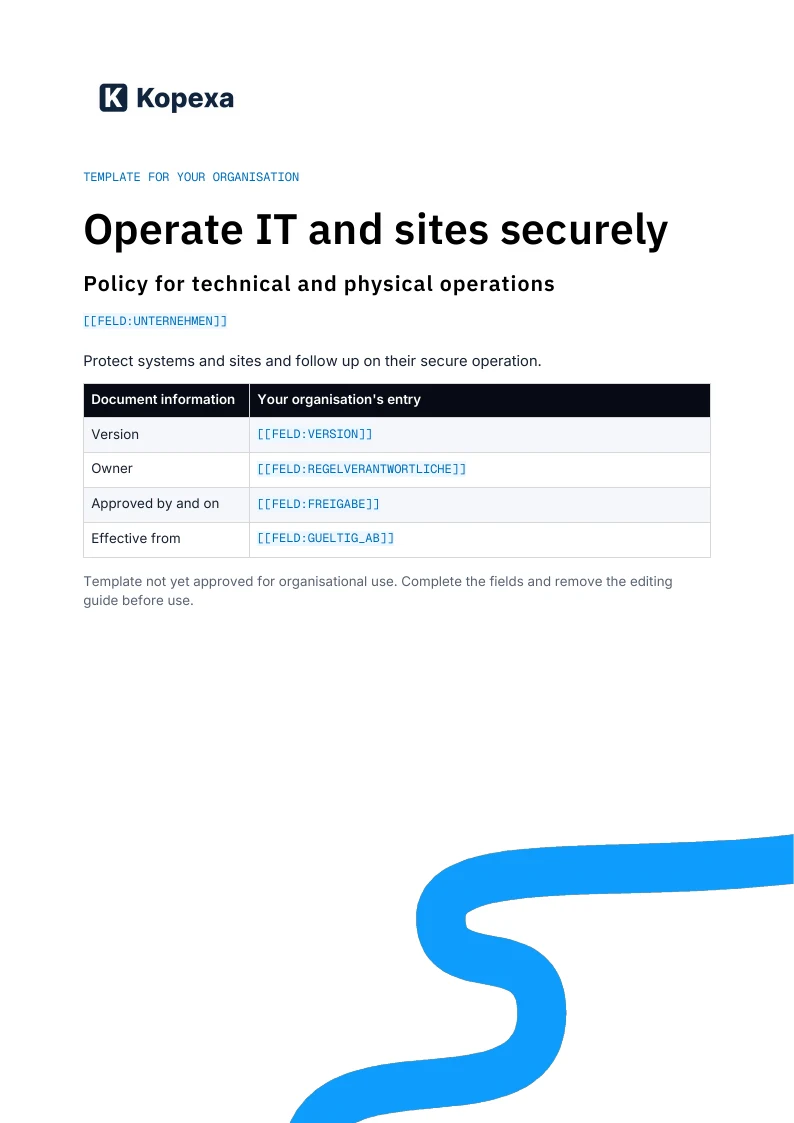
Reuse the shared operational policy
Bring operational rules together and connect existing inventories, work instructions and recovery plans. Includes explained fields and an editing guide.
Free ZIP · DOCX, ODT and PDF · with editing guidance
Template · In German
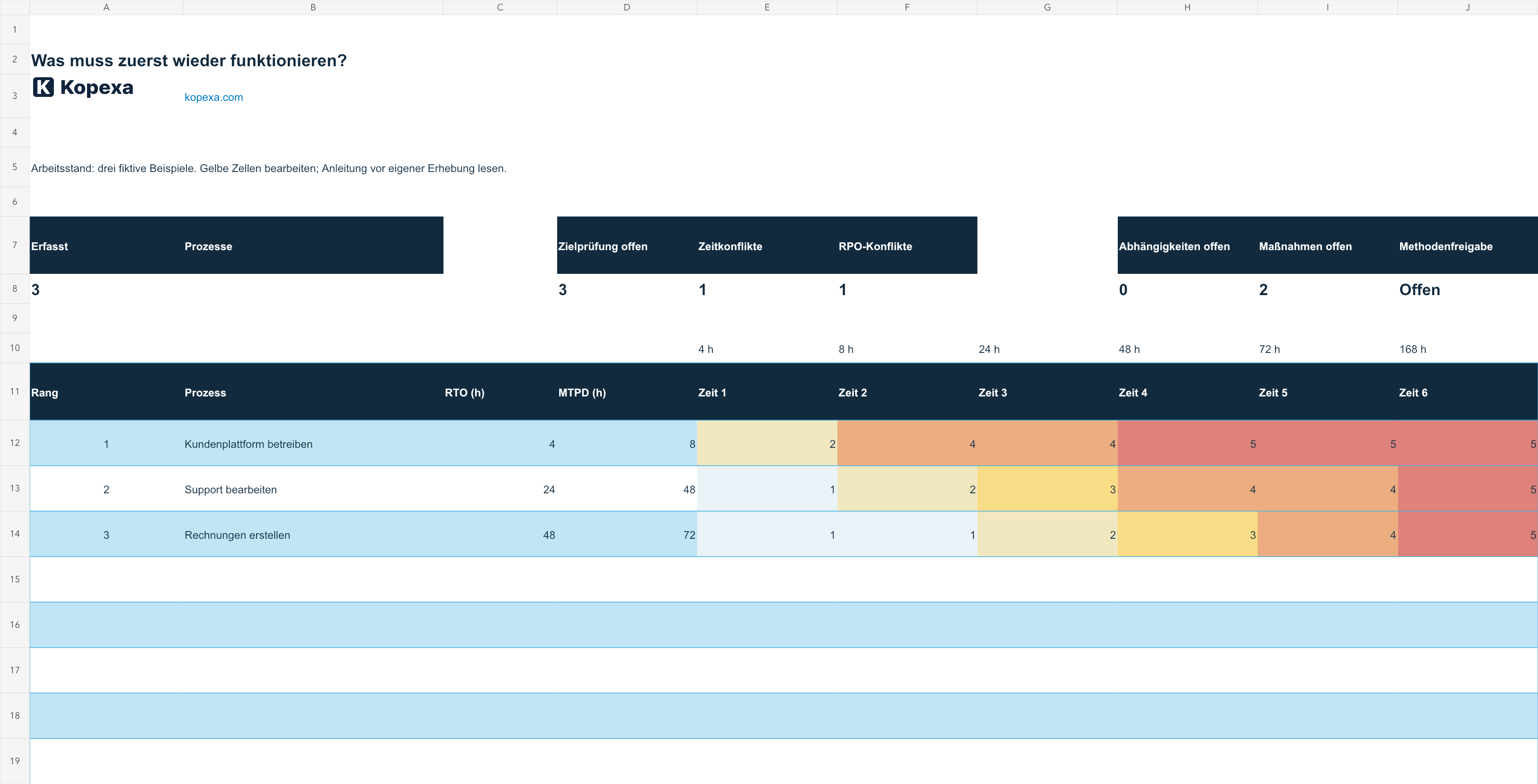
Use the BIA for required availability (German)
Reuse existing business requirements rather than creating another impact assessment. The linked template is currently available in German.
Leitfaden & Excel-Vorlage · Download nach E-Mail-Eingabe
Related resources
Kopexa
Connect services and dependencies in KopexaExplore featureLink affected assets and owners to the recorded decision.