Measure · ISO 27001 and other standards
Plan training and check understanding
Connect current rules to the work of each target group. Plan periodic and event-driven communication and use a work scenario to check whether people understand it.
Reuse existing records
Use the existing onboarding or training plan and current rules. Keep the record structure in an existing spreadsheet, meeting record or learning system.
What to do
- 1
Assign content and target groups
Determine the knowledge each role needs from its duties and risks. Use current rules for information handling, authentication, reporting and relevant approvals. Add necessary specialist knowledge, such as development or administration skills. In the existing plan, record the target group, content and policy version, instructor, format, repetition and relevant triggers such as joining or a role change. Compare required competence with existing education, training and experience. Address gaps through suitable learning, mentoring or another appropriate personnel action. Explain the information security policy, each person's contribution to an effective ISMS, including the benefits of improved security performance, and the implications of nonconformity.
- 2
Deliver training and check understanding with a case
Explain rules through typical tasks. Use suitable questions or a short exercise, such as responding to a suspicious call. Record the date, people reached, version covered and result in the existing record. Clarify wrong answers and available contacts; follow up on missing training.
- 3
Evaluate the effect and update content
Check whether the target group can apply the intended workflow. Use question results, suitable observations and lessons from incidents. Revise unclear content and check the follow-up. Repeat at your risk-based interval and when relevant changes occur. Retain suitable evidence of existing and acquired competence in the existing personnel or training record.
Worked example
A caller requests a login code
Fictional example: During onboarding, a team learns how to respond to an alleged IT support call.
- Apply the rule
- DecisionThe person does not disclose the code, ends the unclear request and uses the known enquiry or reporting channel. Unclear answers are discussed together.
- EvidenceExisting training record with date, target group, policy version, scenario question and follow-up result.
Record the result
- Existing training plan with target groups, role-specific content, responsibility and repeat triggers.
- Traceable delivery, suitable understanding checks and resolved knowledge gaps in the existing record.
Common implementation mistakes
Treating acknowledgement as learning
Use a suitable question or activity to check whether the person can apply the content.
Setting a fixed pass rate as an ISO requirement
Choose an effectiveness check based on risk and target group; the standard does not set a universal pass rate.
Reuse the implementation across requirements
The references below show which requirements the measure contributes to.
View controls and standards
- A.6.3 · Informationssicherheitsbewusstsein, -ausbildung und -schulungGerman guide
The steps connect role-based and risk-based learning with repetition, understanding checks and evaluation of the effect. The organisation determines actual content, competence needs and delivery.
TISAX · 2.1.3
VDA ISA 6.0.3 · Partial overlap
Role-based planning, periodic and event-driven learning, participation and understanding checks contribute to the awareness and training programme. All applicable ISA content, management approval and actual delivery remain to be ensured separately.
ReferenceISO/IEC 27001 · 7.2
ISO/IEC 27001:2022 + Amd 1:2024 · Supporting contribution
Required competence is compared with education, training and experience. Suitable actions address gaps, their effectiveness is evaluated and appropriate evidence of competence remains in the existing record.
ReferenceISO/IEC 27001 · 7.3
ISO/IEC 27001:2022 + Amd 1:2024 · Supporting contribution
Learning covers the information security policy, personal contribution and benefits of an effective ISMS, and implications of nonconformity. Suitable work scenarios check understanding.
Reference
Templates for your implementation
Template
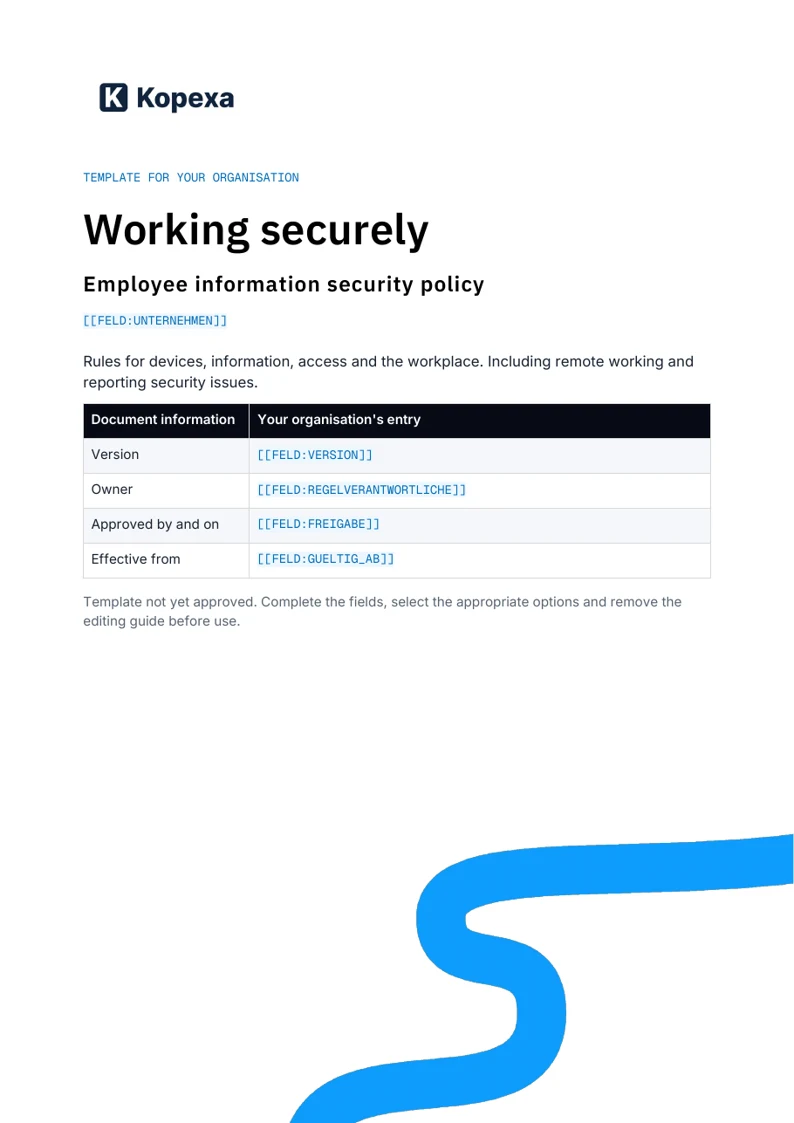
Employee information security policy
An employee information security policy for using devices, information and accounts securely. Ready to adapt to your organisation.
Free ZIP · DOCX, ODT and PDF · with editing instructions
Template
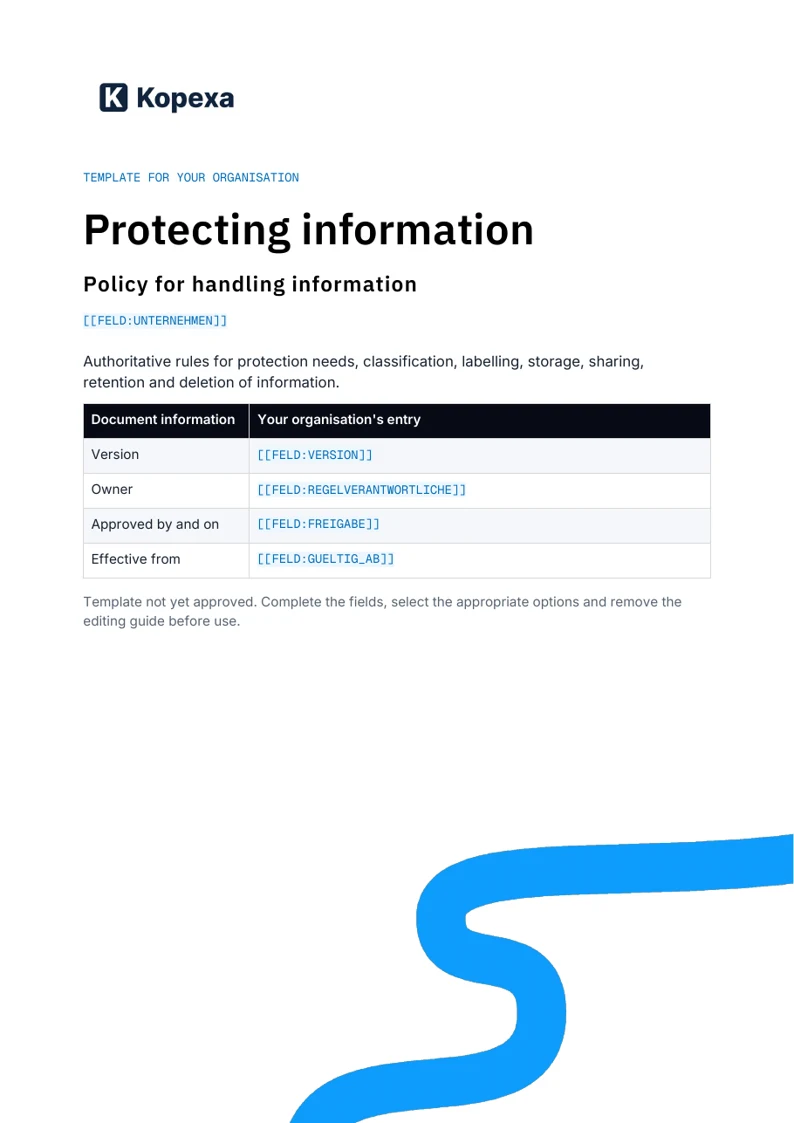
Information protection policy
One policy for information classes, labelling and handling. With fields and an example classification scheme to adapt to your organisation.
Free ZIP · DOCX, ODT and PDF · with editing instructions
Related resources
Kopexa
Policies and acknowledgements in the Workforce HubExplore featureConnect current versions to target groups, acknowledgements and knowledge checks.