Measure · ISO 27001 and other standards
Check information security in projects
Bring security requirements and risks into existing project planning early. Check treatment throughout the project and in the outcome, including projects outside IT.
Reuse existing records
Update the existing project brief, backlog and relevant decision points. Use the leading risk method, information classes and existing supplier, change and operational rules. A separate security project plan or another risk spreadsheet is not inherently necessary.
What to do
- 1
Determine requirements and risks early
Describe purpose, outcome, affected information and assets, and internal and external participants in the existing brief. Determine protection needs and applicable requirements from business, law, contracts and leading rules. Assess risks using the existing method. Consider both the future outcome and project execution, such as project access, communication and shared documents. Record testable security criteria.
- 2
Plan security work through the project
Assign ownership, authority and necessary resources. Connect treatment to existing tasks and suitable project points where authorised people check progress and results. Establish appropriate requirements for external parties through the existing supplier process. The method can fit the project, whether a short relocation, a longer construction project or agile development.
- 3
Review changes and effectiveness
Reassess risks throughout the project and when material changes occur. At planned points, check whether security requirements have been implemented and are effective; select suitable business or technical checks. Keep results, deviations and decisions in the project record. The assigned role decides necessary rework or remaining risks under the leading method.
- 4
Hand over to operations
Transfer the rules, access, responsibilities, evidence and open points actually needed. Check with the receiving roles that they can deliver the intended operation. Handle project access and copies no longer needed under the applicable rules. Continue remaining work in the existing record and use important lessons for later projects.
Worked example
Relocation changes information protection
Fictional example: a small company moves workplaces and an archive to a new site.
- Planning and execution
- DecisionThe project determines protection and authorised recipients for records and transport. Physical access, suitable rooms and operational dependencies are planned early; involved suppliers receive suitable requirements.
- EvidenceExisting project brief with requirements, risks, owners and checkpoints.
- Checking and handover
- DecisionBefore use, responsible roles check intended physical access and availability of required information. Outstanding work and new responsibilities are handed to operations.
- EvidenceTraceable results and decisions in the existing project record.
Record the result
- Existing project brief or backlog with security requirements, risks, owners and checkpoints.
- Implemented and checked treatment with decisions on changes and deviations.
- Traceable handover to operations with necessary rules and owned remaining work.
Common implementation mistakes
Ask about security only at the end
Derive requirements early and maintain risks and checks throughout the project.
Protect only the project outcome
Project access, external cooperation, communication and copies used can also create risks.
Require new standard forms
Update existing project material and use the leading method rather than another inventory.
Reuse the implementation across requirements
The references below show which requirements the measure contributes to.
View controls and standards
- A.5.8 · Informationssicherheit im ProjektmanagementGerman guide
The workflow integrates requirements, execution and outcome risks, roles, treatment and effectiveness checks across the project lifecycle including handover. It is not limited to IT projects.
TISAX · 1.2.3
VDA ISA 6.0.3 · Partial overlap
Early classification and risk assessment, derived measures, review during the project and changes support the ISA project question. Actual projects and applicable additional requirements must be addressed.
Reference
Templates for your implementation
Template
Use the leading risk and planning method
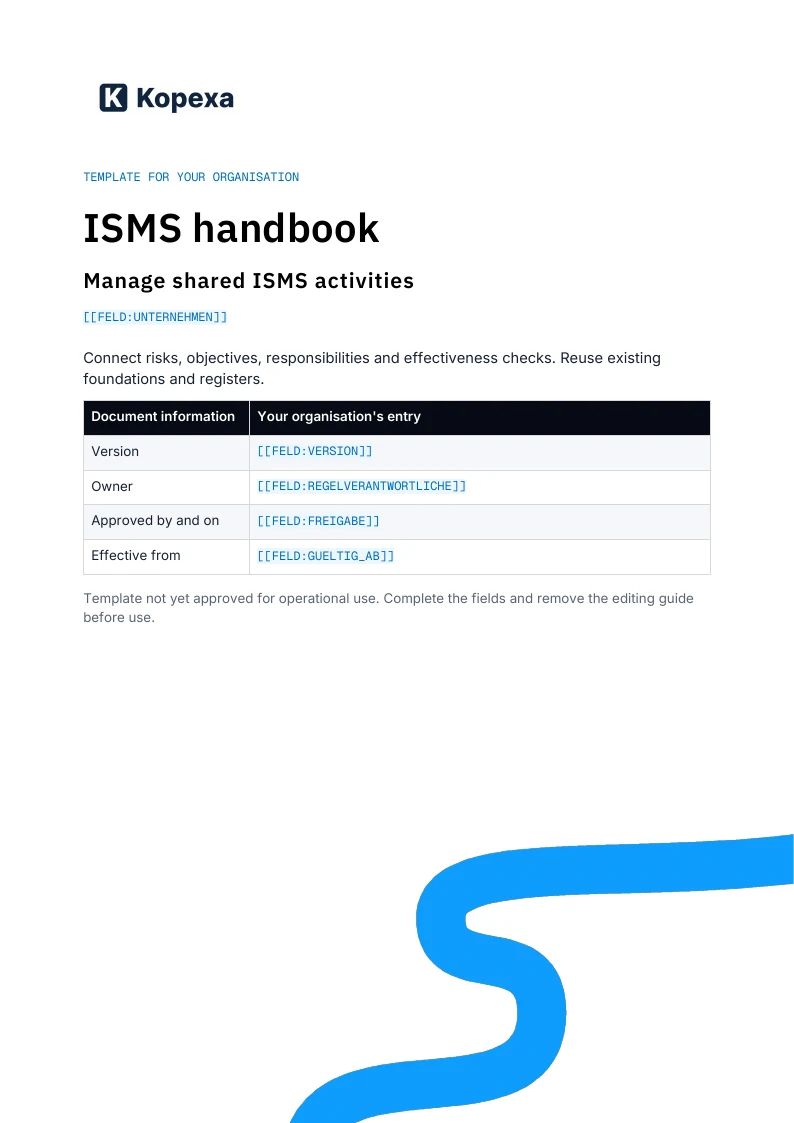
Reuse your existing scope, policy and registers. The handbook connects management processes and identifies the decisions and evidence your organisation supplies.
Free ZIP · DOCX, ODT and PDF · with editing instructions
Template
Reuse information classes and handling rules
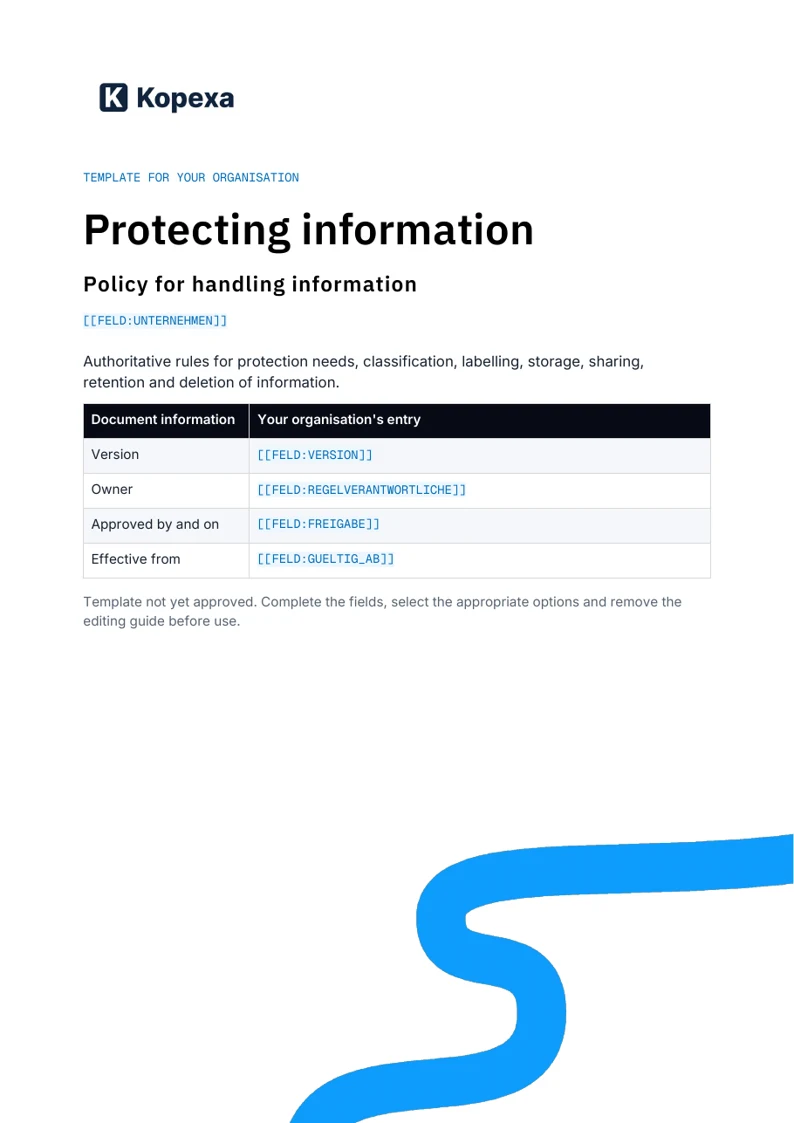
One policy for information classes, labelling and handling. With fields and an example classification scheme to adapt to your organisation.
Free ZIP · DOCX, ODT and PDF · with editing instructions
Related resources
Related measure
Manage external services through the existing processView measureReuse the existing selection, agreement and review process.
Kopexa
Maintain project work in its business contextExplore featureConnect actual tasks with ownership, status and context.