Guide
Choosing risk management software: From assessment to decision
Choose risk management software using a decision case: test assessment methods, measure effectiveness, history and risk acceptance.
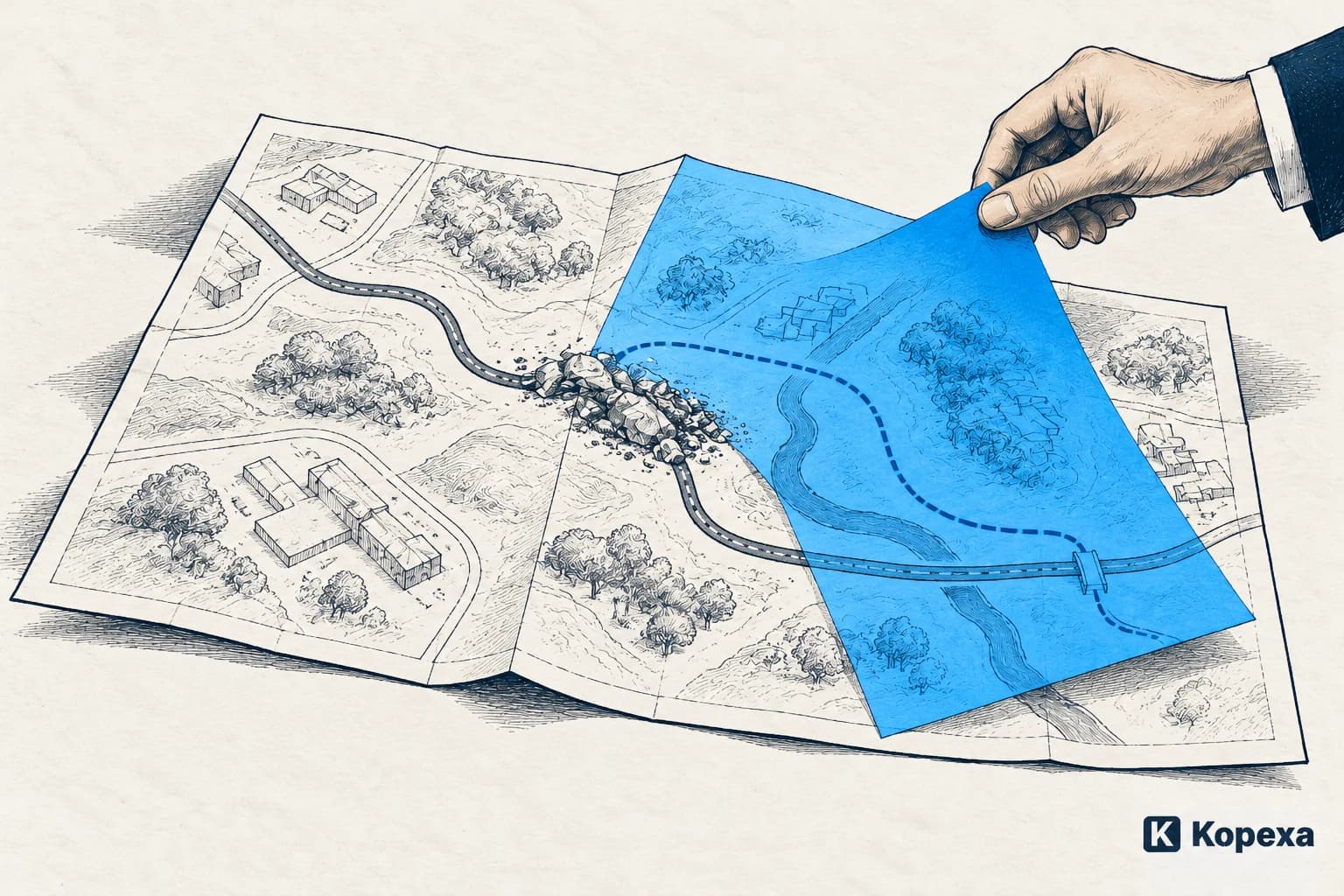

Which measure receives the budget: a second supplier, better recovery or additional access controls? A risk list can contain all three without enabling a decision.
For operational and information security risks, you need traceable assumptions, options and residual risks. These checks help assess software against a real budget decision.
Define the decision before choosing the assessment method
Establish what your risk assessment should enable. A traceable qualitative method may suit prioritisation of operational measures. Financial risk aggregation, capital requirements or simulations need specifically demonstrated calculation models. A coloured matrix does not automatically provide both.
A clear scenario matters: cause, possible event and impact. “Supplier risk” is too broad. “The only maintenance partner becomes unavailable, leaving an equipment fault unresolved for longer” identifies a manageable dependency.
Follow a decision through three states
| Point in time | What you need to know | Typical error |
|---|---|---|
| Before treatment | Which assumptions support the assessment? | A score without reasoning |
| After implementation | What was actually changed and checked? | A completed task immediately counts as effective |
| With residual risk | Who accepts what, until when and under which conditions? | “Accepted” remains indefinitely |
For the second state, subtracting a measure’s expected effect is insufficient. A replacement supplier must actually be capable of delivering the required service. Recovery must work in practice. Verification supports the new assessment.
Risk acceptance and event-driven risk review therefore belong in software selection, before later process design.
How Kopexa establishes business context
Kopexa connects risks with information assets, other assets and measures. Instead of filing a risk merely under “IT”, you can examine the affected asset and technical dependency. A guided process-level BIA adds the time dimension: a short outage may be tolerable, while a longer one substantially affects operations.
The business impact analysis, BIA, assesses outage consequences over time. Likelihood is assessed in the risk assessment.
Measures hold evidence, making the basis for assumed improved protection visible. Objectives and KPIs can then monitor outcomes, such as the proportion of successfully tested restorations rather than completed task counts.
A counter-test is worth more than a perfect demo
During testing, make an already treated dependency less favourable again: the second supplier now uses the same subcontractor as the first. The apparent alternative is therefore restricted.
Can the team recognise which assumption needs review? Does the earlier decision remain traceable? Does a specific task arise, rather than just a different colour? Also test a change of assessment method, so older assessments are not silently reinterpreted.
For your shortlist, choose the system that supports your actual decisions. If quantitative enterprise risk aggregation is mandatory, it must be demonstrated separately. To connect operational risks with safeguards and business processes, test Kopexa during its two-week guided trial.
Quick answers
Frequently Asked Questions
Still have a question? Find the answers here.
Is the number of recorded risks a good selection criterion?
Not on its own. Understandable assessments, traceable decisions and effectively followed-up measures matter more.
Sources
- Business impact analysis in Kopexa — Kopexa [Accessed ]