News
Searchjacked: When browser extensions reroute search queries
Socket reports search redirection through browser extensions. Why an official store is not enough, and how organizations can check extensions and data routes.
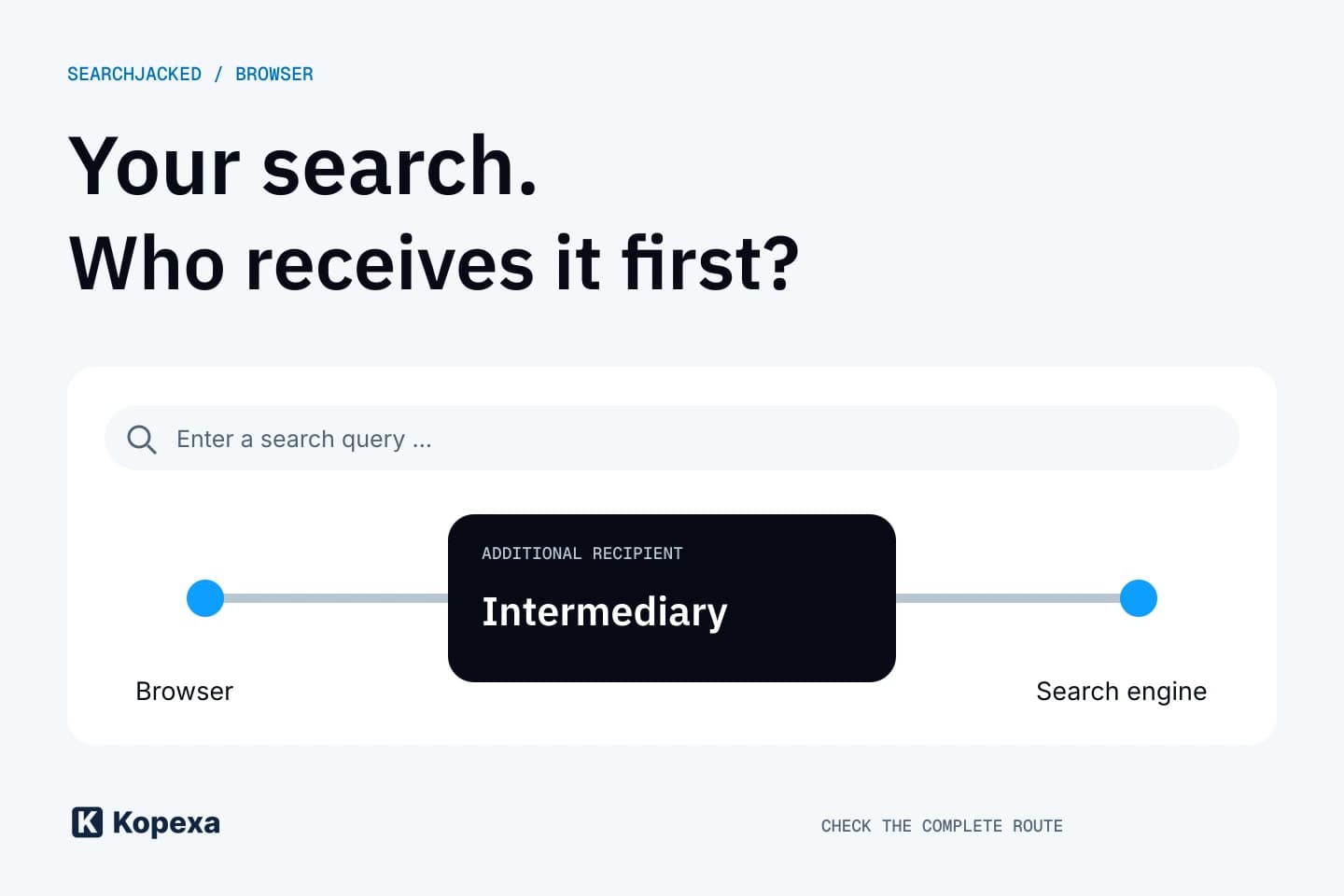

Someone installs a PDF helper. Their searches then pass through another provider. The new Searchjacked report shows why approving a browser extension can also mean approving a data route.
Socket's report of 29 October 2026 identifies 319 extensions with approximately 13.4 million reported users or installations across research spanning back to 2016. This is not a count of people newly affected in October, nor proof of that many compromised devices.
Sources checked on 30 October 2026. We reviewed the research and Google's documentation; we did not independently investigate the extensions.
What the extensions change
According to the report, extensions replace the default search provider and send queries through an operator-controlled intermediary before Bing or Yahoo. Offers include PDF features, manuals and AI search. Socket describes referral monetization as the purpose of the redirection.
Many investigated listings were unlisted in the official Chrome Web Store and promoted through advertising. An unlisted publication alone does not prove abuse. However, official-store distribution does not replace an assessment of actual behavior.
One Socket example needs only a manifest and icons to change search settings. An intermediary can also serve changing destinations. Further harmful redirects are therefore a risk; this does not establish that every reported user received malware.
A small amount of code can open a meaningful data route
Google documents changing the search provider through chrome_settings_overrides. The extension's settings specify the search destination. An assessment focused exclusively on extensive program code or conspicuous additional permissions can therefore miss the issue.
For an organization, the next question is practical: what do employees enter into the address bar? Alongside public queries, this could include internal project names, error messages or business partners' names. These are possible examples, not contents of individual searches confirmed by Socket.
The final search result can look familiar even though another service received the request first. The visible search engine and the complete data route are different things.
What organizations can check now
Start with the extensions actually installed and compare them with approved tools. Names alone are insufficient; record the extension ID, publisher, purpose and intended search provider.
| Question | Useful check |
|---|---|
| Is the extension approved? | Compare the installed inventory with documented approval. |
| Does it alter searches? | Check the current search-provider setting and actual redirection. |
| Does a team need its function? | Establish the business purpose and an acceptable alternative. |
| What happens after remediation? | Confirm removal or blocking and the resulting effective setting. |
Google describes allow and block policies for managed browsers, including a request workflow for needed extensions. First check management coverage and affected working practices. An untested global block could also disrupt necessary tools.
An unexpected redirect warrants investigation, not an automatic verdict
When an extension is found, the responsible IT team and, where appropriate, privacy staff should establish which extension was active, when, and what is known about the data route. Preserve available findings before remediation makes the sequence harder to reconstruct.
A changed search provider proves neither password theft nor a complete account takeover. Conversely, familiar-looking results do not make an additional recipient irrelevant. Whether a reportable incident occurred depends on the actual data and circumstances.
Connect approval with operational checks
The organizational gap often lies between approval and operation: a browser rule exists, but nobody reconciles it with installed extensions or follows up exceptions.
In Kopexa, you can connect tool-use requirements with measures, owners and review evidence. Workforce Hub helps communicate the associated policy to employees. Technical inventory and browser configuration remain in the relevant administration systems.
Quick answers
Frequently Asked Questions
Still have a question? Find the answers here.
Were 13.4 million devices newly compromised in October?
The report does not establish that. Its figure concerns reported users or installations of investigated extensions across a period dating back to 2016. It is neither a count of new October victims nor proof of unique compromised devices.
Is Chrome Web Store distribution enough to approve an extension?
No. Check the publisher, extension ID, business purpose and actual behavior, particularly search-provider changes. An official store listing does not settle whether additional parties receive data.
Does search redirection require everyone to reset passwords immediately?
Search redirection alone does not prove password theft. Preserve findings and assess the actual data route and any additional indicators. Protective measures should follow the evidence.
Sources
- Searchjacked: Hidden Browser Extensions Hijack Searches for 13 Million Users — John Tuckner, Socket () [Accessed ]
- Overriding Chrome settings — Google [Accessed ]
- Allow or block apps and extensions — Google [Accessed ]